

Sealing Solutions for Marine & Maritime Industries
Marine environments are among the most demanding for sealing components. Saltwater, UV exposure, wide temperature swings, constant vibration, and the risk of galvanic corrosion all affect how long a gasket will last. The right marine gasket material depends on where it’s installed, what it’s sealing, and what it will be exposed to over its service life.
A failed seal at sea isn’t just a maintenance headache. On a commercial vessel or recreational boat, a leaking flange, a degraded hatch seal, or a corroded fitting can mean downtime, costly repairs, or safety risks. Getting the gasket material right the first time matters.
Why Marine Sealing Is Different
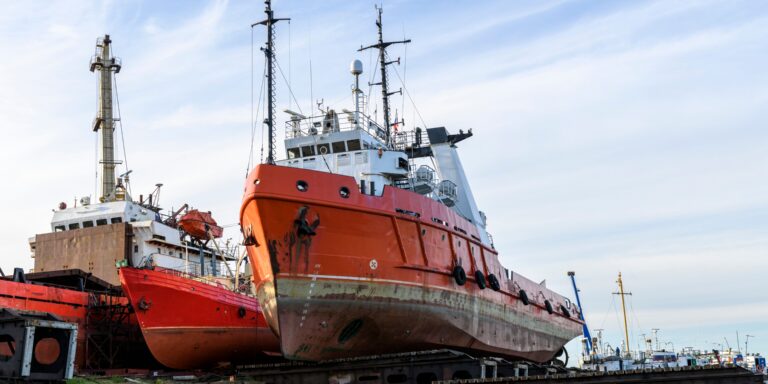
Most industrial sealing applications deal with one or two environmental stressors: heat, pressure, or chemical exposure. Marine and maritime applications often combine several at once.
Saltwater is highly corrosive and accelerates the degradation of materials that aren’t suited to continuous moisture exposure. UV radiation and ozone attack elastomers from above deck. Engine rooms and fuel systems introduce petroleum products that can swell or break down rubber compounds that weren’t formulated for oil resistance. Add vibration from engines and wave action, and you have an environment that demands careful material selection for every sealing point.
This applies to both commercial vessels, container ships, ferries, offshore platforms and recreational craft such as powerboats and sailboats. The scale differs, but the environmental stressors are the same.
Top Gasket Materials for Marine Applications
Because no single material excels under all these conditions, successful marine sealing relies on selecting the right gasket for each specific location. The sections below outline the most common marine gasket materials and where each performs best.
Neoprene — Versatile and Saltwater Ready
Neoprene is one of the most widely used materials in marine sealing, and for good reason. It performs well against weathering, saltwater, and moderate UV exposure. It also offers good resistance to oil and grease, not to the level of Nitrile, but enough for general-purpose use in mixed environments.
It is a practical choice for hull fittings, access hatches, portlight frames, and dock seals where the gasket sees saltwater regularly. Its balance of properties makes it a reliable default material when no single extreme condition dominates.
For a detailed look at neoprene grades and applications, see our list of available Neoprene:
| Grade | Manufacturer | “Shore A” (±5) | Temperature Range | Compliance / Notes |
|---|---|---|---|---|
| Neoprene | CG stock | 50 to 83 Duro | -20 to +170 °F | – |
| Neoprene (AB-245) | American Biltrite™ | 40 Duro | -20 to +190 °F | ASTM D2000: 1BC410 |
| Neoprene (AB-255) | American Biltrite™ | 50 Duro | -20 to +190 °F | ASTM D2000: 1BC510 |
| Neoprene (AB-260) | American Biltrite™ | 60 Duro | -20 to +190 °F | ASTM D2000: 1BC606 |
| Neoprene C.I. (Cloth Inserted) | CG stock | 60 Duro | -20 to +170 °F | – |
| Neoprene (Garlock® 7986) | Garlock® | 60 Duro | -20 to +250°F | ASTM D2000: MIL-R-3065; MIL-Std. 417 Type S Grade SC620 A1 E3 E5 |
| Neoprene F.F. (Fabric Finish) | CG stock | 60 / 70 Duro | -20 to +170 °F | – |
| Neoprene N.I. (Nylon Inserted) | CG stock | 60 Duro | -20 to +170 °F | – |
EPDM — Built for UV and Weather Exposure
EPDM (Ethylene Propylene Diene Monomer) excels in applications with prolonged UV, ozone, and weather exposure. It handles heat and steam well, and maintains its sealing properties in outdoor above-deck environments where Neoprene may degrade more quickly over time.
EPDM is well suited for topside sealing applications such as deck hardware, window frames, and ventilation fittings. It also performs well in freshwater and steam systems aboard vessels. One important limitation: EPDM is not compatible with petroleum-based fuels or oils, so it should not be used in fuel system applications.
For a deeper look at EPDM properties, see our list:
| Grade | Manufacturer | “Shore A” (±5) | Temperature Range | Compliance / Notes |
|---|---|---|---|---|
| EPDM | CG stock | 60 to 70 Duro | -40 to +212 °F | – |
| EPDM (AB-566) FDA | American Biltrite™ | 60 Duro | -40 to +250 °F | FDA 21 CFR 177.2600; ASTM D2000 (1BA610) |
| EPDM (AB-576) NSF-61 | American Biltrite™ | 75 Duro | -40 to +275 °F | NSF/ANSI 61; FDA; ASTM D2000 (1BA715Z1); AWWA C111/A21.11; NSF/ANSI 372 |
| EPDM (Garlock® 98206) | Garlock® | 80 Duro | -40 to +275 °F | NSF/ANSI 61; ASTM D2000 (4BA815A14B13C12) |
| EPDM, Peroxide-cured (Panacea® 6962) | Panacea® | 60 Duro | -4 to +300 °F | – |
Nitrile (Buna-N) — For Fuel and Oil Systems
Nitrile rubber is the material of choice when petroleum-based fluids are involved. Engine rooms, fuel tank connections, fuel line flanges, and bilge system fittings all benefit from Nitrile’s strong resistance to oils, diesel, and marine gas oil.
It’s trade-off is limited UV and ozone resistance. Therefore not the right choice for exposed above-deck applications, but below deck, in enclosed fuel and oil systems, it performs reliably.
| Grade | Manufacturer | “Shore A” (±5) | Temperature Range | Compliance / Notes |
|---|---|---|---|---|
| Nitrile | CG Stock | 60 or 70 Duro | -20 to +170 °F | – |
| Nitrile (AB-365) | American Biltrite™ | 60 Duro | -40 to +200 °F | MIL-SPEC; ASTM D2000 (2BG625B14EA14EF11EF21E014E034) |
| Nitrile (AB-375) | American Biltrite™ | 70 Duro | -20 to +200 °F | ASTM D2000 (2BG725B14EA14EF11EF21E014E034) |
| Nitrile (Garlock® 9122) | Garlock® | 60 Duro | -20 to +250 °F | ASTM D2000 (5BG620A14B14EA14EO14EO34) |
| Nitrile (Robco® 9863) | Robco® | 60 Duro | -40 to +200 °F | MIL-SPEC; ASTM D2000 (2BG625B14EA14EF11EF21E014E034) |
| Nitrile (Transeal® TG-65) | American Biltrite™ | 65 Duro | -20 to +250 °F | M4094E; ASTM D2000 (M2BG617B14E014EO34Z1) |
| Nitrile MIL-R-6855 | CG Stock | 60 Duro | -50 to +220 °F | MIL-R-6855 Class 1 Grade 60 |
| Nitrile N.I. (Nylon Inserted) | CG Stock | 60 Duro | -20 to +120 °F | – |
| White Nitrile | CG Stock | 65 Duro | -20 to +170 °F | – |
| White Nitrile FDA (AB-366) | American Biltrite™ | 60 Duro | -40 to +200 °F | FDA; 3-A Sanitary; ASTM D2000 (1BF610) |
PTFE — Chemical Resistance for Demanding Fluids
PTFE (polytetrafluoroethylene) is chemically inert across a wide range of fluids, which makes it suitable for sealing applications that involve aggressive chemicals, treated water, or systems requiring a high level of corrosion resistance. Ballast water systems, onboard water treatment, and chemical handling lines aboard larger vessels are typical use cases.
PTFE is not a general-purpose marine material; it’s used where its specific properties are needed. Learn more about its properties and applications in our guide to PTFE Teflon gaskets.
See the list below of available PTFE in stock.
| Grade | Manufacturer | “Shore A” (±5) | Temperature Range | Compliance / Notes |
|---|---|---|---|---|
| Virgin Molded PTFE | CG Stock | 138 lbs/ft³ | -300 to +500 °F | – |
| Durlon® 9000 | Durlon® | 138 lbs/ft³ | -350 to +520 °F | RoHS, REACH, Fire Test, FDA |
| Durlon® 9200W | Durlon® | 156 lbs/ft³ | -350 to +520 °F | RoHS, Meets ABS, REACH, FDA |
| GYLON® Style 3500 | Garlock | 2000 psi | -450 to +500 °F | RoHS, Meets ABS, FDA |
| GYLON® Style 3504 | Garlock | 135 lbs/ft³ | -450 to +500 °F | RoHS, Meets ABS, FDA |
| GYLON® Style 3510 | Garlock | 106 lbs/ft³, 175 lbs/ft³ | -450 to +500 °F | Meets ABS, FDA |
| GYLON® Style 3545 | Garlock | 128 lbs/ft³ | -450 to +500 °F | Meets ABS, FDA |
| INERTEX® SQ-S | INERTEX® | -450 to +600°F | NSF/ANSI 61, FDA | |
| INERTEX® SQ-S “V” Rigid | INERTEX® | -450 to +600°F | NSF/ANSI 61, FDA |
Material Comparison: Marine Sealing Applications
The table below compares four common sealing materials used in marine applications across key performance properties. Each material has distinct strengths and limitations; selecting the right choice depends on matching material properties to the specific exposures and requirements of your sealing point.
| Property | Neoprene | EPDM | Nitrile | PTFE |
|---|---|---|---|---|
| Saltwater resistance | Good | Good | Moderate | Excellent |
| UV / ozone resistance | Moderate | Excellent | Poor | Excellent |
| Fuel / oil resistance | Moderate | Poor | Excellent | Excellent |
| Weather / outdoor use | Good | Excellent | Poor | Good |
| Temperature range | -20 to +190 °F | -40 to +275 °F | -20 to +250 °F | -450 to +600°F |
| Typical marine use | Hatches, hull fittings, dock seals | Topside seals, deck hardware, steam | Engine room, fuel lines, bilge fittings | Ballast, water treatment, chemical lines |
Note: The resistance ratings above are general guidelines based on typical material properties. Actual performance, including temperature range, pressure limits, and chemical compatibility, varies by grade, formulation, and manufacturer. Always verify against the supplier’s technical datasheet for your specific application before making a final material selection. Contact a Custom Gaskets Ltd. material specialist if you need help interpreting datasheet values for your sealing requirements.
Custom Gasket Cutting for New Builds and Retrofitting
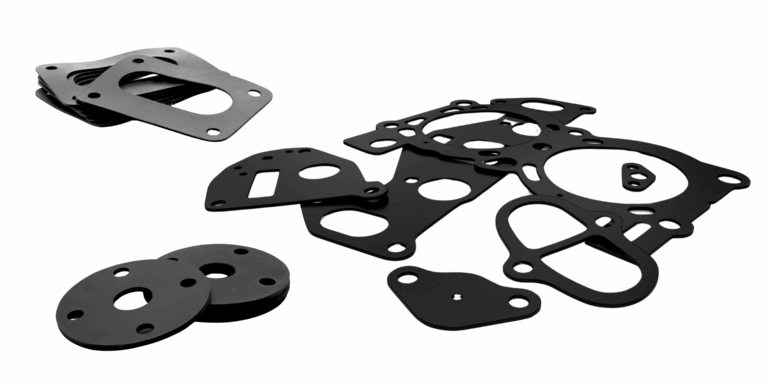
Standard off-the-shelf gaskets often don’t fit the requirements of marine applications, especially on vessels with non-standard fittings, older systems, or custom-built components. This is where custom gasket cutting becomes essential.
Custom Gaskets Ltd. produces marine gaskets using CNC cutting tables, hydraulic die presses, and hand cutting for oversized or complex profiles. Our facility can work from customer-supplied DXF or DWG files, or our in-house drafters can create drawings from a sketch or physical template.
This capability applies to both new vessel construction and to retrofitting gaskets on systems currently in service. If the gasket needs to fit a specific flange, hatch frame, or fitting that no standard product covers, we can cut it to specification. Explore our full custom gasket cutting services.
Flange Isolation Kits — Protecting Against Galvanic Corrosion
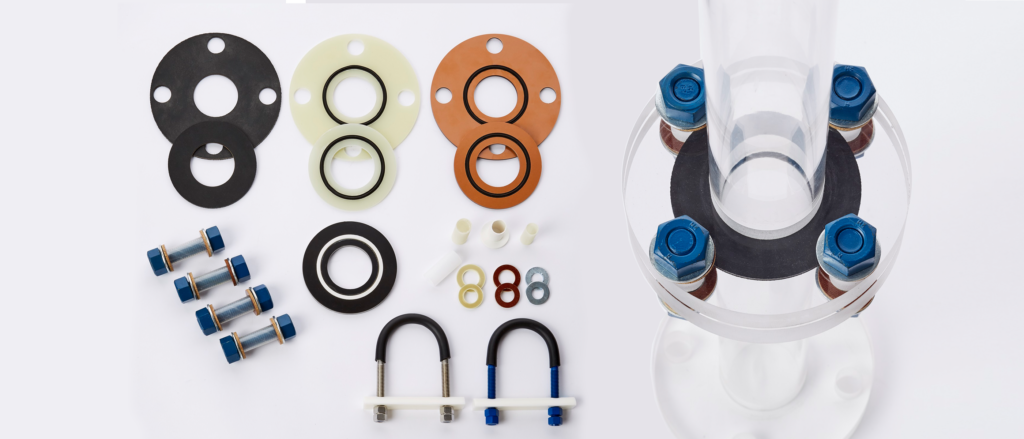
One of the less obvious but important sealing considerations in marine environments is galvanic corrosion. When two dissimilar metals are in contact in the presence of saltwater, an electrolyte, an electrochemical reaction occurs that accelerates corrosion of the less noble metal.
Flange isolation gasket kits prevent this by eliminating metal-to-metal contact at flanged joints. The kit includes an isolating gasket, isolation sleeves, and isolation washers that break the electrical circuit between the flanges. This protects the pipeline and extends the service life of the entire flanged system.
Custom Gaskets Ltd. is one of Western Canada’s leading distributors of isolation kits, supplying Type E, F, D (RTJ), and G10 configurations across DIN, ASME, and API classes. Custom and special sizes are available on request. View full details on our flange isolation gasket kits page.
Why Work With Us?
Custom Gaskets Ltd. has been supplying the marine and maritime industries for over 60 years. Our team understands that marine sealing isn’t a one-size-fits-all discipline; each application point on a vessel has its own exposure conditions, pressure requirements, and dimensional constraints.
We supply a wide range of marine sealing products, including elastomer sheets, isolation kits, compressed sheet materials, spiral wound gaskets, rubber matting, and wide-ribbed matting. Our manufacturing capabilities allow us to produce custom-cut gaskets for new builds and in-service retrofits. For an overview of our full marine offering, visit our Marine & Maritime Sealing Solutions page.
Speak with a Material Specialist
Need help selecting the right gasket material for your marine application? Speak with a Material Specialist at Custom Gaskets Ltd. to review your material, size, and sealing requirements.
Frequently Asked Questions
Neoprene and EPDM both perform well in saltwater. Neoprene is a versatile choice for hull fittings and hatches. EPDM is preferred for above-deck applications with heavy UV and ozone exposure. The best choice depends on the specific application and any secondary exposures such as fuel or chemicals.
Consider the primary exposure. If the application is above deck with high UV and ozone, EPDM is the better choice. If the installation sees mixed conditions: saltwater, moderate weather, and light oil contact, Neoprene’s broader resistance profile may be more practical. A material specialist can help you evaluate the specific conditions.
No. EPDM is not compatible with petroleum-based fuels or oils and will degrade in fuel system applications. Nitrile (Buna-N) is the recommended material for marine fuel lines, tank connections, and engine room fittings.
A flange isolation kit prevents galvanic corrosion at flanged pipe joints by eliminating metal-to-metal contact. In saltwater environments, two dissimilar metals in contact can create a corrosive electrochemical reaction. Isolation kits, which include an isolating gasket, sleeves, and washers, interrupt this reaction and extend the life of the piping system.
Yes. We produce custom-cut gaskets from customer drawings, DXF/DWG files, sketches, or physical templates. This covers non-standard fittings, oversized flanges, and complex profiles for both new construction and retrofit projects.