
Choosing Neoprene, EPDM, or Nitrile for Gasket Material
Selecting the correct gasket material for the application directly impacts sealing performance, service life, and maintenance costs. Exposure to oil, water, steam, UV, or chemicals can quickly degrade the wrong material.
At Custom Gaskets Ltd., we supply standard elastomer sheets and recognized branded grades from leading manufacturers. This guide compares Neoprene (CR), EPDM, and Nitrile (NBR / Buna-N) to help you select the right material for your application.
Neoprene (CR – Chloroprene Rubber)
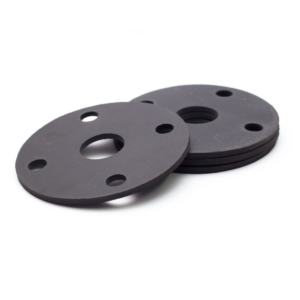
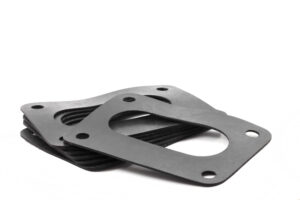
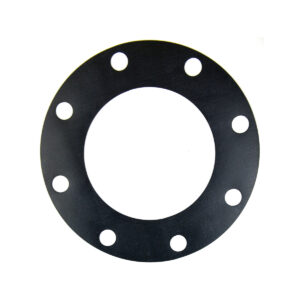
Neoprene is a versatile, general-purpose elastomer used for industrial gasketing where a balance of durability, weathering resistance, and mechanical strength is needed. It’s commonly used in HVAC, general plant sealing, and outdoor equipment where moderate performance across several conditions is acceptable.
Typical Service Temperature: Approx. -40°C to 100°C (application dependent)
Key Performance Characteristics:
- Moderate oil resistance
- Good ozone and UV resistance
- Good flame resistance
- Good mechanical strength
- Moderate compression set resistance
Typical Applications
- HVAC flange gaskets
- Outdoor equipment enclosures
- Refrigeration seals
- Marine sealing
- General industrial gasketing
Stock and Grades Available
We stock Neoprene sheets in standard, branded, and reinforced grades to match your durometer and spec requirements.
| Grade | Manufacturer | “Shore A” (±5) | Temperature Range | Compliance / Notes |
|---|---|---|---|---|
| Neoprene | CG stock | 50 to 83 Duro | -20 to +170 °F | – |
| Neoprene (AB-245) | American Biltrite™ | 40 Duro | -20 to +190 °F | ASTM D2000: 1BC410 |
| Neoprene (AB-255) | American Biltrite™ | 50 Duro | -20 to +190 °F | ASTM D2000: 1BC510 |
| Neoprene (AB-260) | American Biltrite™ | 60 Duro | -20 to +190 °F | ASTM D2000: 1BC606 |
| Neoprene C.I. (Cloth Inserted) | CG stock | 60 Duro | -20 to +170 °F | – |
| Neoprene (Garlock® 7986) | Garlock® | 60 Duro | -20 to +250°F | ASTM D2000: MIL-R-3065; MIL-Std. 417 Type S Grade SC620 A1 E3 E5 |
| Neoprene F.F. (Fabric Finish) | CG stock | 60 / 70 Duro | -20 to +170 °F | – |
| Neoprene N.I. (Nylon Inserted) | CG stock | 60 Duro | -20 to +170 °F | – |
Neoprene is often selected when the application requires balanced performance at a competitive cost, particularly in outdoor environments.
EPDM (Ethylene Propylene Diene Monomer)
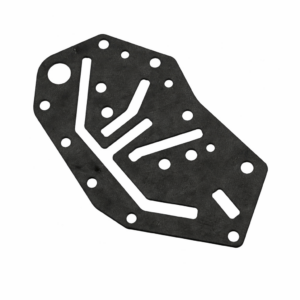
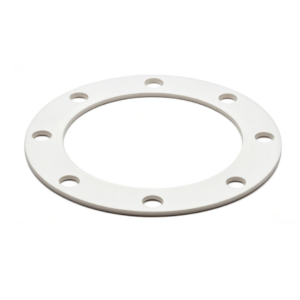
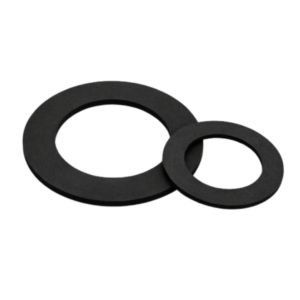
EPDM is one of the most common elastomers for water, steam, and outdoor exposure. It holds up well against UV, ozone, and weathering, which is why it’s widely used in water & wastewater, mechanical rooms, and outdoor industrial equipment.
EPDM is generally not recommended for petroleum oils and fuels. If hydrocarbons are present, Nitrile is usually a better fit.
Key Performance Characteristics
- Excellent water resistance
- Excellent steam resistance
- Outstanding UV and ozone resistance
- Excellent aging stability
- Poor resistance to petroleum oils
Typical Applications
- Water treatment plants
- Wastewater facilities
- Steam service gaskets
- Outdoor flange connections
- Food and beverage processing (approved grades)
Stock and Grades Available
We carry EPDM sheets in standard and compliant grades (e.g., NSF/FDA options) for water, steam, and outdoor service.
| Grade | Manufacturer | “Shore A” (±5) | Temperature Range | Compliance / Notes |
|---|---|---|---|---|
| EPDM | CG stock | 60 to 70 Duro | -40 to +212 °F | – |
| EPDM (AB-566) FDA | American Biltrite™ | 60 Duro | -40 to +250 °F | FDA 21 CFR 177.2600; ASTM D2000 (1BA610) |
| EPDM (AB-576) NSF-61 | American Biltrite™ | 75 Duro | -40 to +275 °F | NSF/ANSI 61; FDA; ASTM D2000 (1BA715Z1); AWWA C111/A21.11; NSF/ANSI 372 |
| EPDM (Garlock® 98206) | Garlock® | 80 Duro | -40 to +275 °F | NSF/ANSI 61; ASTM D2000 (4BA815A14B13C12) |
| EPDM, Peroxide-cured (Panacea® 6962) | Panacea® | 60 Duro | -4 to +300 °F | – |
Nitrile (NBR – Buna-N)
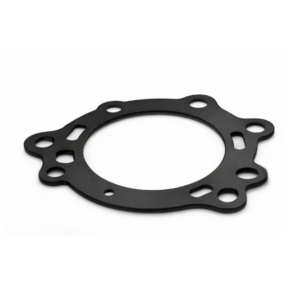
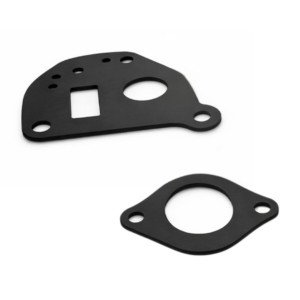
Nitrile is the go-to elastomer for sealing where petroleum oils, fuels, greases, and many hydraulic fluids are present. It’s used heavily in oil & gas, industrial equipment, maintenance shops, and systems with lubricants.
Compared to EPDM, Nitrile is typically less resistant to UV/ozone, so for outdoor exposure it may need protection, shielding, or a different elastomer depending on the service conditions.
Key Performance Characteristics
- Excellent resistance to petroleum oils
- Good abrasion resistance
- Good mechanical strength
- Moderate compression set resistance
- Limited UV and ozone resistance
Typical Applications
- Oil & gas pipeline gaskets
- Hydraulic equipment seals
- Fuel system components
- Lubrication systems
- Industrial machinery exposed to hydrocarbons
Stock and Grades Available
We stock Nitrile sheets in standard and spec-driven grades for oil, fuel, and hydraulic sealing (ASTM/MIL/FDA where required).
| Grade | Manufacturer | “Shore A” (±5) | Temperature Range | Compliance / Notes |
|---|---|---|---|---|
| Nitrile | CG Stock | 60 or 70 Duro | -20 to +170 °F | – |
| Nitrile (AB-365) | American Biltrite™ | 60 Duro | -40 to +200 °F | MIL-SPEC; ASTM D2000 (2BG625B14EA14EF11EF21E014E034) |
| Nitrile (AB-375) | American Biltrite™ | 70 Duro | -20 to +200 °F | ASTM D2000 (2BG725B14EA14EF11EF21E014E034) |
| Nitrile (Garlock® 9122) | Garlock® | 60 Duro | -20 to +250 °F | ASTM D2000 (5BG620A14B14EA14EO14EO34) |
| Nitrile (Robco® 9863) | Robco® | 60 Duro | -40 to +200 °F | MIL-SPEC; ASTM D2000 (2BG625B14EA14EF11EF21E014E034) |
| Nitrile (Transeal® TG-65) | American Biltrite™ | 65 Duro | -20 to +250 °F | M4094E; ASTM D2000 (M2BG617B14E014EO34Z1) |
| Nitrile MIL-R-6855 | CG Stock | 60 Duro | -50 to +220 °F | MIL-R-6855 Class 1 Grade 60 |
| Nitrile N.I. (Nylon Inserted) | CG Stock | 60 Duro | -20 to +120 °F | – |
| White Nitrile | CG Stock | 65 Duro | -20 to +170 °F | – |
| White Nitrile FDA (AB-366) | American Biltrite™ | 60 Duro | -40 to +200 °F | FDA; 3-A Sanitary; ASTM D2000 (1BF610) |
Side-by-Side Comparison: Neoprene vs EPDM vs Nitrile
Use the quick comparison below to match each elastomer to the service conditions. The values shown are typical and may vary by grade, so confirm durometer, temperature range, and compliance using the tables in each section.
| Property | Neoprene (CR) | EPDM | Nitrile (NBR / Buna-N) |
|---|---|---|---|
| Best in | General-purpose + outdoor durability | Water/steam + outdoor weathering | Oils/fuels/hydraulics |
| Water / Steam | Good | Excellent | Moderate |
| UV / Ozone / Weathering | Good | Excellent | Limited |
| Petroleum oils / fuels | Moderate | Poor (not recommended) | Excellent |
| Typical Temperature Range* | -20°F to 190°F | -40°F to 300°F | -40°F to 250°F |
| Common Durometers stocked (Shore A) | 40–83A (by grade) | 60–80A (by grade) | 60–70A (common), plus specialty grades |
| *Temperature ranges depend on compound and service conditions (see grade tables in each section). | |||
Compliance and Spec Availability
| Compliance / Standard | Neoprene | EPDM | Nitrile |
|---|---|---|---|
| ASTM D2000 options | ✔ (AB-245/255/260; Garlock® 7986) | ✔ (AB-566; AB-576; Garlock® 98206) | ✔ (AB-365; AB-375; Garlock® 9122; Robco® 9863; TG-65; White Nitrile FDA AB-366) |
| NSF/ANSI 61 (potable water) | — | ✔ (AB-576; Garlock® 98206) | — |
| FDA options | — | ✔ (AB-566; AB-576) | ✔ (White Nitrile FDA AB-366) |
| MIL-spec options | ✔ (Garlock® 7986) | — | ✔ (AB-365; Robco® 9863; MIL-R-6855) |
| AWWA / NSF 372 options | — | ✔ (AB-576) | — |
How to Choose the Right Material
If you’re deciding between Neoprene, EPDM, and Nitrile, start with what the gasket will touch (water, oil, steam, etc.), then confirm temperature and any required standards.
Step 1: Identify what the gasket is sealing
- Water / steam / outdoor exposure → EPDM
- Oil / fuel / hydraulic fluids → Nitrile (Buna-N / NBR)
- General-purpose industrial + outdoor durability → Neoprene (CR)
Step 2: Check the operating temperature
- Use the normal continuous temperature (not short spikes).
- If your temperatures run near the upper limit, pick a grade designed for that service.
Step 3: Consider outdoor conditions (sunlight, ozone, weather)
- EPDM and Neoprene handle UV/ozone better over time
- Nitrile is usually better kept indoors or protected from sunlight
Step 4: Pick the right hardness (durometer)
- Softer rubber (lower Shore A) seals better on uneven flanges and lower bolt load
- Harder rubber (higher Shore A) holds shape better under higher compression
Step 5: Confirm any required compliance
Choose a grade that matches the spec on the project:- Potable water → EPDM with NSF/ANSI 61 (ex: AB-576, Garlock® 98206)
- Food contact → FDA grades (ex: EPDM AB-566, White Nitrile FDA AB-366)
- Spec-driven industrial / military → grades with ASTM D2000 and/or MIL callouts (ex: AB-365, MIL-R-6855, Garlock® 7986)
Why Work With Custom Gaskets Ltd.
We supply the material and die-cut the gasket to your exact dimensions. Need help choosing Neoprene, EPDM, or Nitrile (including NSF/FDA/ASTM/MIL grades)? Send your drawing, sample, or service conditions and request a quote today. We’ll recommend the right grade and cut it for your application.